Friday, 11 February 2011

Alfred Gibbs Bourne, UCL, and Sir (Edwin) Ray Lankester


Mark Bourne’s account of his great, great grandfather’s experience at UCL under the tutorship of the eminent zoologist, Ray Lankester (1847-1929, top picture), fired my curiousity to know what became of Alfred Gibbs Bourne. As with many of Lankester’s students, he did rather well.

Mark writes: ‘Alfred Gibbs went to Madras in 1886 to join the Presidency College and became Professor of Biology. He was made a Fellow of the Royal Society in 1895. In 1903 he was appointed Director of Public Instruction and worked on changes in the secondary education system, introducing the Secondary School Leaving Certificate System. After his retirement, he took charge as director of the Indian Institute of Science. He held this position from 1915 to 1921. He was knighted Knight Commander of the Order of the Indian Empire in 1913.’

Alfred had been in India for less than a year when he received a letter from Lankester, obviously in response to the draft of a paper that he had asked his old tutor to read:

Letter from E. R. Lankester to A. G. Bourne, 18th January 1887

‘I am now going to pitch into you. I think your paper on Earthworms very bad. It is the old complaint I have to make which I have made to you and dozens of younger men – viz. you will not take the trouble to say what you mean – in fact are infernally lazy. Even your reference to “Q.J.M.S.” shows damnable shirking. It ought to be “Quart. Journ. Micros. Sci.” You coolly assume that everyone knows all about the thing before you begin to write. In consequence your paper is most uninteresting. You never explain what the Perichaetes are or in what points they are known to vary – or what remarkable anatomical characters they exhibit. You don’t describe any of your species fully and you give no drawings. You coolly say often at great length with an air of solemnity and importance “The presence of so and so was not determined” which really ought to be written “I am so lazy and careless that I did not trouble to ascertain this important fact – and I won’t even now take the trouble to do it – but prefer to write without doing so”. The whole style of that kind of work is damnable. You have heaps of these worms & have no excuse for sending home slovenly work. ...’

One hopes that Alfred, having spent some years as Lankester’s student and also as his laboratory assistant, was not overly perturbed by this attack on his scholarship. Mark suggests that Lankester, in fact, held his old student in high regard: ‘His letters of recommendation of Alfred to other institutions and publishers (including that very the same paper!) were always very complimentary. I think it was he also who was a proposer for Alfred's membership to the Royal Society.’ And the respect was mutual: ‘Alfred certainly seemed to have a lot of respect for him even when Ray seems to be travelling off to Europe, leaving Alfred (somewhat in the lurch) to deal with a lot of the responsibility for teaching the students.’

Mark also attached a photograph (above) of Alfred’s wife, Emily Tree Glashier (later Lady Bourne). She was an acclaimed botanical artist and teamed up with other artists at Kodaikanal to produce illustrations of the local flora. Many of Alfred's scientific articles were also illustrated by her. For readers interested in 19th century earthworms, here's a link to an original illustrated article by Alfred Gibbs Bourne.

Thursday, 10 February 2011

The Bayntons of Bloomsbury


Simon Auger contacted me for help in find out more about his maternal ancestors, Thomas (baptised 1718) and Mary (nee Tufton) Baynton (d. 1776) who lived in Field Court, Gray’s Inn between 1767 and 1776 (they also lived, for a very brief time, in Queen Square).

Thomas and Mary came from Wiltshire and were married in Dursley in 1745. Their five children were all baptised in Bloomsbury, at St Andrew Holborn – James Lewis, baptised 1753; Thomas in 1767; John in 1769; Samuel in 1771; Sarah in 1773. Samuel is Simon’s 4x great grandfather. Simon has no information about Thomas’s death or his occupation although Samuel (and possibly also John) became a greengrocer. If anyone reading this blog is a Baynton descendent, we’d very much like to hear from you.

Putting on my historian’s sleuth hat I’m interested in the 14-year gap between the birth of the Baynton’s first child, James Lewis (1753) and their second, Thomas (1767). There doesn’t seem to have been a problem with Mary’s fertility as she had three more children in quick succession so what might be going on here? It’s possible that Mary had a number of miscarriages or stillbirths between her first and second sons and these wouldn’t have been recorded. It’s also possible (and perhaps more likely) that Thomas was working away for much of this period. Perhaps he was in the navy or military. These might be useful lines of enquiry for Simon to pursue.

The lovely picture above (top) shows two 18th century houses in Field Court (thisisforever, Flickr), and the one below depicts a snowy Field Court looking towards Gray’s Inn Square (J D Mack, Flickr). This area is now populated with legal businesses.

Wednesday, 9 February 2011

Bloomsbury missionary becomes head of a church


Bloomsbury People has featured a number of stories about Bishop Andrew McLaglen, the father of Hollywood star, Victor McLaglen. Andrew McLagen was consecrated in November 1897 as bishop of the Free Protestant Episcopal Church of England (later known as the Evangelical Church of England). This church was formally dissolved in 1997 although it remains active in the US and Canada.

From knowing absolutely nothing about Bishop Andrew McLaglen's background when the first blog about him was posted on 6 August 2009, other than the fact he had been an apprentice missionary in Bloomsbury from 1877-1879, the Bloomsbury Project now has a link to the church through its current Primus and Bishop of California, the Most Reverend Edwin D Follick, who is also Director of University Libraries and University Chaplain, South Baylo University, Anaheim, California. Bishop Ed has sent me a photograph (top picture) of three of the first bishops of the Free Protestant Episcopal Church. It shows (from left) the Most Reverend Lord Leon Checkemian, DD LLD, the first Archbishop; the Right Reverend James Martin, DD LLD; and the Right Reverend Andrew Albert McLaglen, DD LLD.

The photograph was reproduced on the souvenir programme of the 12th Annual Convocation and Dinner of St Andrew’s Ecumenical Research Intercollegiate Fellowship, held at St Andrew’s Collegiate Church, Stonebridge Road, Tottenham, North London, on 4 September 1965. This church was acquired in 1967 by the Church of God but maybe it was later demolished or used for a different purpose because I cannot find reference to a church in Stonebridge Road. Laziness on my part because I haven’t actually been to investigate!

The middle picture shows Bishop Edwin Follick (right) presenting a sculpture to the Most Reverend Charles D Boltwood, DD LLD, Bishop Primus of the Free Protestant Episcopal Church, in 1978. It was Dr Boltwood who wound down the operations of the FPEC in the UK and transferred the church records to North America.

From humble beginnings in Bloomsbury, this story has travelled the world and pulled in more information about Victor McLaglen’s ancestry than I believe was generally known before. And by another strange twist of fate, I was talking to an elderly friend about the Bloomsbury Project and its stories when he informed me that he had known Victor’s daughter Sheila and her husband, and had even met (only once) the great actor himself. His recollection was that Victor arrived, having clearly enjoyed a ‘couple of drinks’!

Finally, I had to include a photograph (bottom) of Victor with his daughter Sheila and son Andrew.

Bloomsbury writer gives Charlie Chaplin idea for film


Some time ago Jenny Woolf contacted me to draw my attention to a book by Thomas Burke (1886-1945) entitled Living in Bloomsbury. London: G. Allen & Unwin, 1939. Although the book is now out of print, it’s possible to buy it very inexpensively through Amazon and I’ve just placed an order for a second edition (1947) costing £5.00.

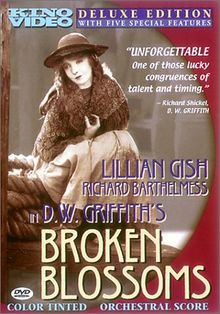
Thomas Burke was a prolific author of fiction and non-fiction, publishing his first short story, ‘The Bellamy Diamonds’ in 1901 at the age of fifteen. He was born in Clapham, South London, and seems to have been orphaned (or at least became fatherless) early in life, ending up in a home for middle-class poor but ‘respectable’ boys. Much of his non-fiction work about London, particularly the East End, is considered to be romanticised but a number of his stories captured the imagination of the burgeoning film industry and were adapted for Hollywood. D W Griffith, for example, used Burke’s short story ‘The Chink and the Child’ from Limehouse Nights (1917) as basis for his silent movie, ‘Broken Blossoms’ (1919), and Charlie Chaplin derived ‘A Dog’s Life’ (1918) from the same book.

I’m not certain whether Burke ever lived in Bloomsbury but he certainly died here – at the Homeopathic Hospital, Queen Square, on 22 September 1945, at the very end of World War II.

Tuesday, 8 February 2011

The Love Letters of Alfred Gibbs Bourne


Mark Bourne contacted me with a fascinating account of his great, great grandfather’s experience at University College London (UCL). Alfred Gibbs Bourne, aged 20 (top picture), was a biology student at UCL in 1879. He studied biology under (Sir) Edwin Ray Lankester (1847-1929) who had been appointed to the chair of zoology in 1875. Alfred subsequently became Lankester’s assistant and worked as his demonstrator. Mark quotes from two journals written by Alfred during this period. He says: ‘The journal is essentially a love letter and was exchanged at several intervals with his wife-to-be, Emily, during an enforced separation to allow them to continue their studies. However, of interest to your project might be some descriptions of his life as a student demonstrator.’

Written on 25th Nov 1879:

'From 2 to 5 the practical zoology class lasts + I have to look after it all, settle what is to be done, provide material + be generally responsible for the whole thing. Ray sometimes does not come in but leaves it all to me. I have three demonstrators to help me, 2 of whom are “swell men" who have taken their degrees at Oxford + are both older than myself so that I feel a little shy of telling them what to do.
On Tuesday + Thursday we have the Ladies' Class + I have to take that myself – Lankester generally giving them a little time. - Oh how I wish my own darling was in it. Wouldn't I take pains over it then – as it is I do my best for them because it will be rather a good thing to say afterwards if they pass their examination that I had something to do with the teaching of the first ladies who ever took a degree.'

In 1878, UCL became the first British university to admit women on the same terms as men.
'You have heard of my Ladies Class - the council have settled that it had better not be continued after Xmas - they have been in the habit of attending Lankester's lectures & then 2 afternoons a week coming to me upstairs for practical work - They have thus asked me to continue with them giving them private lessons - i.e. two of them ... have asked me to take them at home two evenings a week - my first impulse was to say no - chiefly on your account & I would do so in a moment if I thought you would not like it, but then I thought that you had too much trust in me to abstain from teaching 2 young ladies Biology - my great wish to do it lies in the fact they are the first ladies who have gone up for a Science degree & of course if I could pass them well it would be greatly to my credit & I might get more work to do another year & if I stick to Biology it will be very important that I should get plenty of coaching, that's the thing that pays. I hardly like however arranging to coach these women without knowing what my own darling would wish, as all I do will be only a means to make her happy in life & care for her'.
Mark says that as a science student himself (Earth Sciences, University of Oxford), he finds accounts of his great, great grandfather’s life very interesting. He also noticed in our video of the Bloomsbury project, an image of women being taught in 1878 and in fact this image (bottom picture) was taken in the zoology department – notice the animal skeletons on the desks.

The Newsoms of Bloomsbury Square

Raymond Foster recently contacted me with details about his great, great grandparents Samuel John and Jane Hovil Newson who, in the 1850s, lived at number 3 Bloomsbury Square. The photo above shows this lovely square, which is the oldest of London's residential squares, set out in 1665. It was originally called Southampton Square. Here's a link to a panorama of the entire square.

Jane was born in 1807 in the City of London to John and Sarah Sawyer (née Hovil) and baptised at the church of St Botolph-without-Aldersgate. Her grandfather, John Hovil, was a celebrated clockmaker, living and working in Horsleydown, Southwark. Jane went to Cork (Ireland) as a young woman and there married an Italian, Giovanni Berra. He died within a year of their marriage but not before she had established ‘Signora Berra’s School’ on Patrick Street where she taught languages.

Jane subsequently married Samuel John Newsom in 1839. He was a member of a large Quaker family in Cork. They were importers and retailers of tea and coffee. Samuel and Jane left Ireland in about 1845 and settled in Bloomsbury Square where Jane continued to teach languages but whether she set up another school is uncertain (I’m hoping that my colleagues researching the Bloomsbury Project might help here). Raymond states that ‘it is just possible that the Sawyer family (with Dublin connections), living just round the corner in Montague Place, were relatives of Jane, but this is speculative.’

Samuel and Jane had three children. In 1865, their elder daughter, Pauline Genevieve, married John Harwood Thomas, a native of Cork, at St George’s Bloomsbury. Jane died in 1870, in Tavistock Place.

If anyone has more information about this family, please do contact me.

Dr Henry Shuckburgh Roots and the founder of Roget's thesaurus


In a blog last May I discovered some intriguing information about Dr Shuckburgh Roots (1785-1861) who lived at 42 Russell Square in the 1830s and helped in a pioneering operation to repair the disfigured nose of a 40-year-old shoemaker. In searching the web for more information about Dr Henry Shuckburgh Roots, I came across a post by Brian Shuckburgh (2002) also searching for connections to his ancestor. I had hoped that Brian would see the blog and indeed he did and contacted me a week or so later. Brian lives in Honolulu but originally came from Kingston-upon-Thames, home of many Shuckburghs and Roots dating back to the 17th century.

Members of the Roots family came to England with William of Orange in 1688 (the name was originally de Rutz), and settled in Kingston. The Shuckburghs were also an old family, one member being Master of the Kings Buck Hounds under Henry VIII, a circumstance that apparently explained the adoption of the hunting horn as the family crest.

Henry, whose father George was also a doctor, became a Fellow of the Medical and Chirurgical Society (later the Royal Society of Medicine) in 1819. By 1853 he was consulting physician to St Thomas’s Hospital, London, and apparently no longer living at 42 Russell Square. I have found one article by Henry Shuckburgh Roots in the Lancet (1823), in which he tries a number of treatments for an enlarged thyroid in a 19-year-old girl, including the regular application of leeches to the thyroid. Eventually, after attending a talk by Dr Roget, who recommended the use of iodine to reduce the size of the thyroid, he successfully applied this remedy and subsequently reported his results. Interestingly, Dr Peter Mark Roget (1779-1869) was not only a medical doctor but also the creator of the famous thesaurus which bears his name. From 1808, Roget lived at 30 Bernard Street, Bloomsbury (just off Russell Square), with his mother and sister but later moved to 18 Upper Bedford Place (now Bedford Way), Bloomsbury, where he remained until his death.

At the end of Henry Shuckburgh Roots’ paper he gives his address as Grenville Street, Brunswick Square, only a few hundred metres from Russell Square.
The top picture shows a doctor applying leeches to a patient's neck in 1827, about the same time as Dr Roots would have doing the same thing to his teenage patient. The photograph below is dated 1924 and shows a physician using calipers to measure an enlarged thyroid (also called a goitre) in a young girl.